

Cloud Architecture (Pro)
DefectDojo Cloud is a multi-tenant SaaS platform running on Google Kubernetes Engine (GKE) in Google Cloud. This page describes how the platform is structured and how customer environments are kept separate.
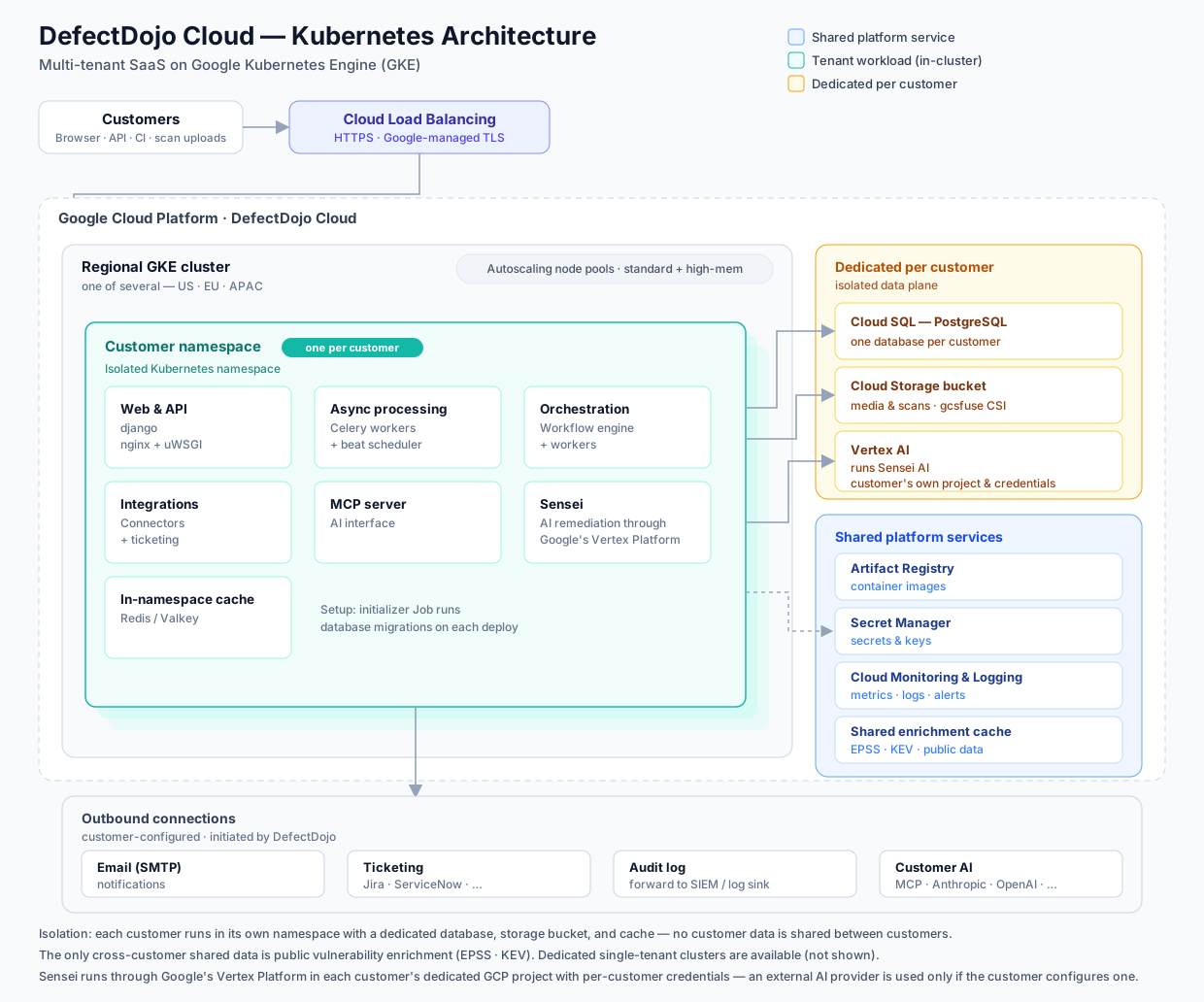
How a request flows
- Customer traffic (browser, API, or CI) arrives over HTTPS at Google Cloud Load Balancing, which terminates TLS using Google-managed certificates.
- The load balancer routes the request into the customer’s environment inside a regional GKE cluster, where the web/API tier (django, served by nginx and uWSGI) handles it.
- The web tier reads and writes the customer’s dedicated PostgreSQL database and dedicated Cloud Storage bucket, and uses an in-namespace cache (Redis/Valkey) for sessions and as the task broker.
- Longer-running work, such as scan imports, deduplication, and notifications, is handed to asynchronous workers (Celery) so requests stay responsive.
Tenant isolation
Every customer runs in its own Kubernetes namespace, and the data each customer stores never shares a store with another customer:
- Dedicated database: a separate PostgreSQL database per customer (Cloud SQL).
- Dedicated object storage: a separate Cloud Storage bucket per customer for uploaded scans and media, mounted into the workloads via the GCS FUSE CSI driver.
- Dedicated cache: each namespace runs its own Redis/Valkey instance.
- Per-customer credentials: each environment has its own secrets and its own TLS certificate and hostname.
There is no shared application data plane between customers. Data is encrypted in transit (TLS) and at rest (Google Cloud default encryption).
Regions and data residency
The platform runs regional GKE clusters across multiple geographies (for example North America, Europe, and Asia-Pacific). A customer environment, along with its database and storage bucket, lives in the region selected for that customer, which supports data-residency requirements.
Workloads in a customer environment
Each namespace contains the components needed to run DefectDojo Pro end to end:
| Group | Purpose |
|---|---|
| Web & API | Serves the UI and REST API (django · nginx + uWSGI). |
| Async processing | Background jobs and scheduling (Celery workers + beat). |
| Orchestration | Coordinates multi-step workflows across the platform. |
| Integrations | Connectors and ticketing integrations. |
| MCP server | AI interface for connecting your own AI tooling. |
| Sensei | AI remediation through Google’s Vertex Platform. |
| In-namespace cache | Redis/Valkey for sessions and task brokering. |
On each deploy, a short-lived initializer job runs database migrations before the new version serves traffic.
Sensei and AI isolation
Sensei, DefectDojo’s AI remediation capability, runs through Google’s Vertex Platform with the same per-customer isolation as the rest of the data plane:
- Each customer’s Sensei requests run in that customer’s dedicated GCP project, authenticated with per-customer credentials.
- There is no shared AI tenancy: one customer’s prompts, findings, and results never pass through another customer’s environment.
- An external AI provider is used only if the customer configures one (for example through the MCP server or a customer-supplied AI integration).
Platform services and operations
Shared, Google-managed services support every environment without carrying customer data between tenants:
- Artifact Registry: signed container images.
- Secret Manager: secret and key material.
- Cloud Monitoring & Logging: metrics, logs, and alerting used by our on-call team. Node pools autoscale to absorb load.
The only cross-customer shared data is public vulnerability enrichment (EPSS and KEV).
Integrations are outbound-only
Connections to external systems, such as email (SMTP), ticketing (Jira, ServiceNow, and others), security scanners, and error monitoring, are configured by the customer and initiated outbound from the customer’s environment.
Isolation by tier
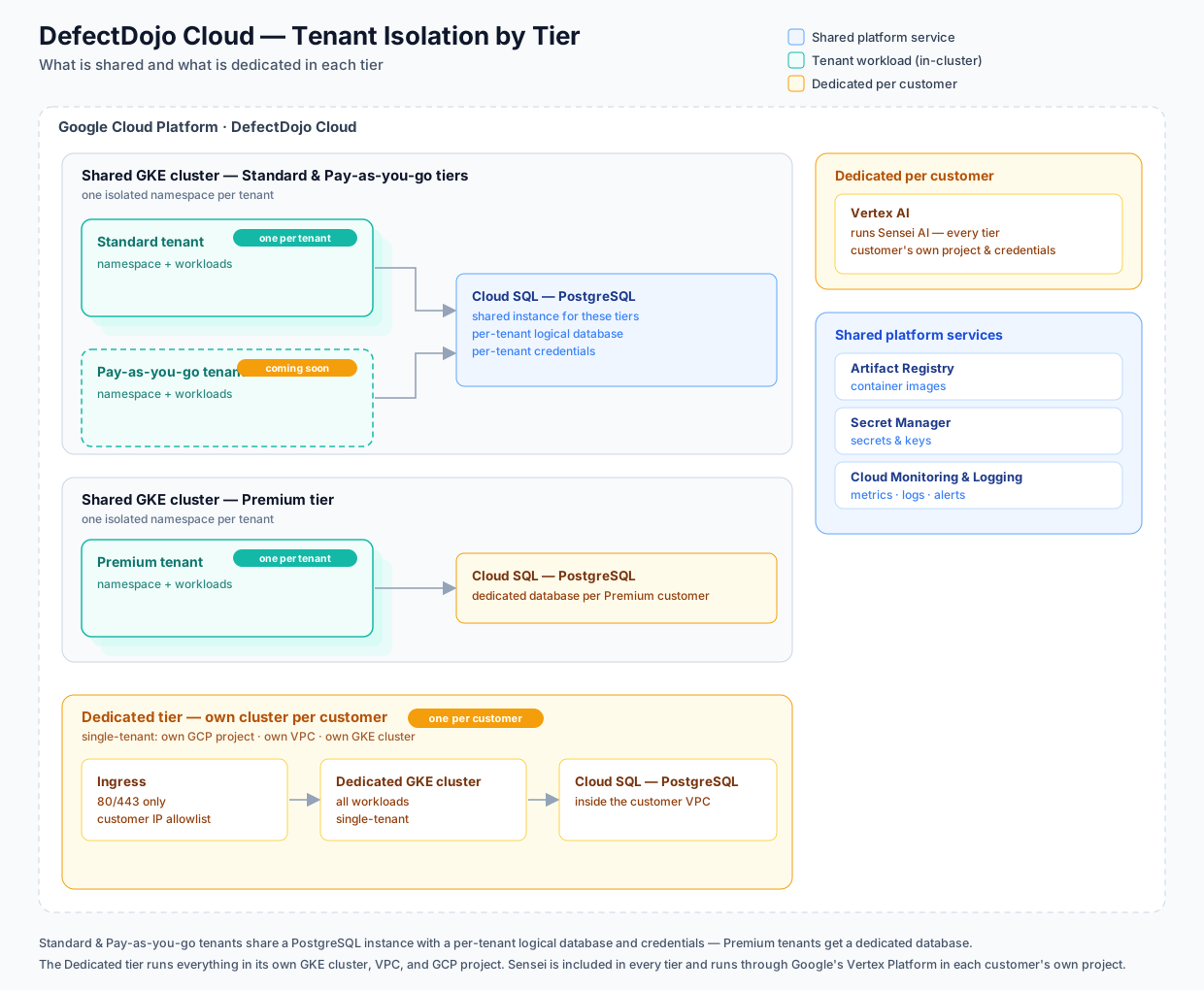
DefectDojo Cloud is offered in tiers that differ in how much of the stack is dedicated to a single customer:
| Tier | Compute | Database | Network boundary | Sensei |
|---|---|---|---|---|
| Standard | Isolated namespace on a shared cluster | Own logical database and credentials on a shared PostgreSQL instance | Shared VPC, per-tenant hostname + TLS, optional IP allowlist | Included |
| Pay-as-you-go (coming soon) | Isolated namespace on a shared cluster | Own logical database and credentials on a shared PostgreSQL instance | Shared VPC, per-tenant hostname + TLS, optional IP allowlist | Included |
| Premium | Isolated namespace on a shared cluster | Dedicated PostgreSQL database per customer | Shared VPC, per-tenant hostname + TLS, optional IP allowlist | Included |
| Dedicated | Own GKE cluster | Dedicated PostgreSQL database in the customer’s own VPC | Own GCP project and VPC, ingress restricted to the customer’s IP range | Included |
Sensei is included in every tier, and in every tier it runs through Google’s Vertex Platform in the customer’s own GCP project with per-customer credentials.
Have a question this page doesn’t answer? Contact your DefectDojo representative.